
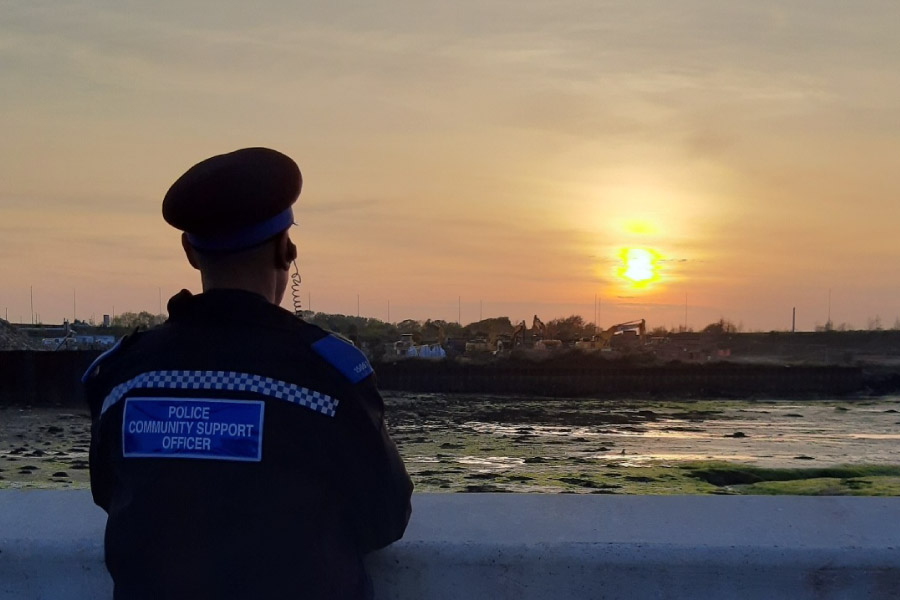
Become a visible, trusted presence at the heart of your local area. You’ll help improve quality of life, build strong community relationships, and provide vital reassurance to the public.

Annual Salary: £27,204 – £29,859
Plus shift allowance and weekend enhancement payments of around a further £4,800 per year.

Every day brings something new
No two shifts are the same. In return for your dedication, you’ll enjoy a competitive salary, excellent benefits, and the reward of knowing your work truly matters.
A vital link between the police and the community
Since their introduction, police community support officers (PCSOs) have become a cornerstone of neighbourhood policing, serving as a vital connection between the police and the communities we protect. As a PCSO, you’ll play an active role in identifying local priorities, addressing anti-social behaviour, and helping communities tackle everyday issues.
While enforcement remains a valuable tool, the real strength of the PCSO role lies in a supportive, preventative approach. By using calm communication, practical guidance, and positive engagement, PCSOs help bring about lasting change, fostering trust, reducing tension, and improving community wellbeing.
This approach not only sets PCSOs apart from traditional policing roles, but also helps build stronger, more cohesive communities. You’ll work closely with local groups, individuals, and partners to co-create solutions and empower residents to take ownership of local initiatives. As a PCSO, you’re key to building safer, more connected neighbourhoods.
What are the key differences between a PCSO and a Police Constable?
What are the key differences between a PCSO and a police constable?
A PCSO focuses on community engagement, crime prevention and building strong relationships with local residents. They are often the reassuring and familiar face of neighbourhood policing, helping to solve local issues and keep communities safe. A police constable has different powers and responsibilities, including responding to emergency incidents, dealing with violent offenders and making arrests.
Do PCSOs have the same powers as police constables?
PCSOs play a unique and important role in neighbourhood policing. Their focus is on preventing crime, supporting communities and building trust with the people they serve. By working proactively with local residents and partners, PCSOs help address issues early and make communities safer places to live and work. Police constables have different powers and responsibilities, including responding to emergency incidents and taking enforcement action when needed.
What makes the PCSO role unique?
If you’re passionate about working with people and making a lasting difference in your community, the PCSO role offers a unique opportunity to focus on prevention, problem-solving and building public trust.
PCSOs play a vital role in neighbourhood policing, forming strong community relationships and helping tackle local issues at their source. It’s a rewarding career where you can see the direct impact of your work every day, while developing valuable skills and experience within policing.
Can PCSOs support police investigations?
Yes. PCSOs play a key role in supporting investigations and helping to prevent crime. Through their day-to-day presence in communities, they build trusted relationships and develop a detailed understanding of local issues, concerns and the people they serve. This insight provides valuable information to support investigations, identify opportunities to safeguard vulnerable people and help tackle crime and anti-social behaviour. As the familiar face of neighbourhood policing, PCSOs make a meaningful difference every day and are an essential part of the wider policing team.
What will you be doing day-to-day?
A police community support officer (PCSO) is a visible and approachable member of the neighbourhood policing team who works closely with communities to prevent crime, tackle anti-social behaviour and build public confidence. Through engagement, problem-solving and partnership working, PCSOs help identify local issues, support residents and create safer, stronger and more connected communities.
PCSOs are at the heart of neighbourhood policing, providing a reassuring presence and building positive relationships with the people they serve. No two days are the same. They patrol local areas, engage with residents, support vulnerable people, visit schools, attend community events and work alongside partner agencies to address local concerns.
Their local knowledge and understanding of community issues help prevent crime, develop valuable intelligence and support wider policing activity. By identifying problems early and working collaboratively to find solutions, PCSOs make a real difference to people’s lives and help keep communities safe.
What skills do you need?
Successful candidates will demonstrate:
Communication Skills
Being able to communicate clearly and confidently is at the heart of the PCSO role. You’ll speak with people from all walks of life, adapting your approach to different situations while building trust and understanding.
Compassion and Empathy
PCSOs regularly support people who may be vulnerable, upset or in difficult circumstances. Being able to listen, understand different perspectives and show genuine care can make a real difference to someone’s experience.
Problem-Solving Ability
Many community issues require practical, long-term solutions rather than immediate enforcement. PCSOs work with residents, partner agencies and local organisations to identify concerns and help resolve problems before they escalate.
Confidence and Resilience
Not every conversation will be easy. PCSOs need the confidence to engage with a wide range of people and the resilience to deal professionally with challenging situations while remaining calm and approachable.
Community Focus
A passion for helping others and improving local neighbourhoods is essential. Successful PCSOs are committed to building strong community relationships and making a positive impact where they work.
Teamwork and Partnership Working
PCSOs work closely with police officers, local authorities, schools, businesses and community groups. Being able to collaborate effectively helps create safer and more connected communities.
Initiative and Independence
PCSOs often manage their own workload and identify opportunities to address local concerns. Being proactive and able to work independently is an important part of the role.
A Desire to Make a Difference
Above all, great PCSOs are motivated by helping people and serving their communities. They take pride in being a visible and trusted presence, helping to keep neighbourhoods safe and supporting those who need it most.
Working patterns and pay
Contract type
Permanent
Work hours
Full time (37hrs per week) on a shift-based pattern and flexible working can be considered
Starting salary
£27,204 to £29,859 per annum, plus additional shift allowance and weekend enhancement payments of around a further £4800 per annum
Are you eligible?
Qualifications
You will need to be educated to QCF Level 2 (GCSE at grade A*-C / 9-4 or equivalent) in both English and mathematics, or have relevant work experience at an equivalent level.
There may also be a requirement and opportunity to study towards English and/or maths qualifications, which our Learning and Development Standards Unit will discuss, support and guide you through.
Tattoos
If you have tattoos that may be visible while wearing uniform (for example on your hands, arms, face, or neck), you’ll be asked to upload photographs of them as part of your application. Our Recruitment Team will review these in line with our tattoo and standards of dress policy to ensure they meet professional requirements.
Confidence with basic office IT skills
A full manual driving licence (desirable only)
How do you apply?
If you’ve got the skills and qualities we’re looking for, becoming a police community support officer (PCSO) starts here. Simply follow the online application link — no CV or covering letter required.
Do you have any questions?
If you’re looking for a rewarding career where you can make a real difference from day one, we’d love to hear from you.
Apply to become a PCSO and you’ll be joining a team at the heart of policing, helping to keep Hampshire and the Isle of Wight safe.
If you have any questions about police staff recruitment, please email police.recruitment@hampshire.police.uk
Alternatively, please call us on 023 80 451611. This phone line is staffed 08:30-16:30, Monday to Friday (with a voicemail facility outside of these hours).
Find your Place.
Find your Purpose.
Join a team where your skills matter. Our police staff are at the heart of everything we do, providing the expertise and support that helps keep our communities safe. We are committed to helping you succeed through training, career development, flexible working and wellbeing support.