
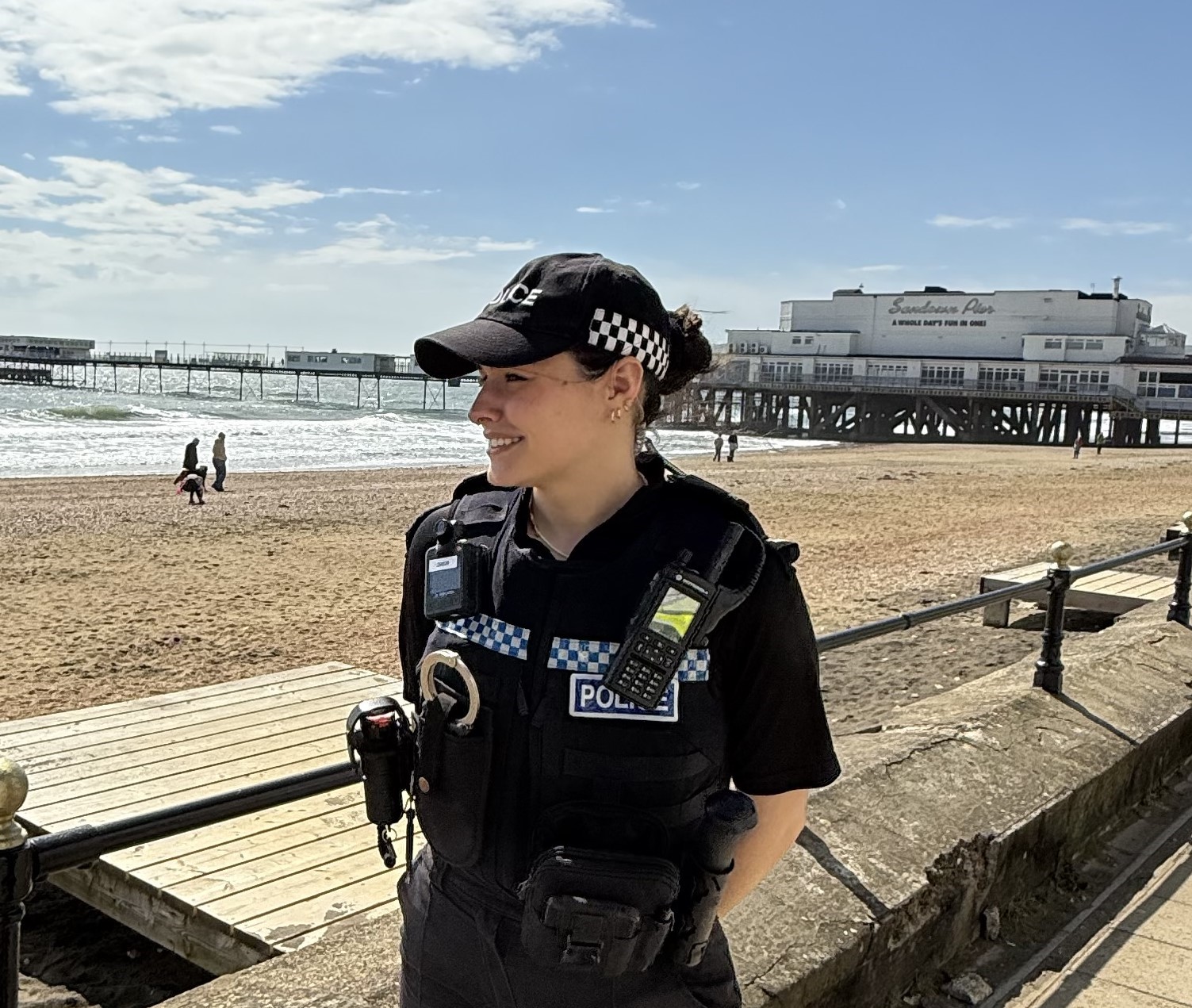
Hear about working for us: District Neighbourhood Policing Team Officer, Tayla
Can you tell us about your role?
My role is within the District Neighbourhood Policing Team (DNPT) on the Isle of Wight. We are relatively small teams made up of officers and Police Staff Investigators, working a 6 day-on, 4 day-off shift pattern alongside our District Policing Team (DPT) colleagues.
A key part of my role is dealing with detainees while they are in custody. This includes conducting interviews, completing any outstanding enquiries, and managing remands where necessary. In addition, we support the DPT with resourcing when required, which usually involves covering two or three shifts per set on DPT duties.
Because the role combines both investigative and frontline responsibilities, it allows us to remain skilled in both areas. Attending jobs on the frontline provides valuable perspective, as the investigative side encourages us to think carefully about the evidence needed when preparing to interview a suspect. This dual focus ensures that we approach each incident with a balanced view, considering both immediate response and longer-term investigative needs.
What would a standard day look for you?
As with most roles in the Police, no two days are ever the same within DNPT. Some shifts are spent working within our own teams, while others involve supporting the DPT.
A typical day in DNPT begins with checking custody to see if any suspects are present. Once allocated a detainee, we review the available evidence and begin compiling an interview plan. From there, we focus on gathering any outstanding evidence, working together as a team to collect it as quickly as possible.
Once sufficient evidence has been gathered, we conduct the interview and present the findings to the suspect. Following this, the Sergeant makes a decision on the appropriate outcome — whether that is charge, remand, bail, or no further action.
Although the work can be demanding, the outcomes are often very rewarding. It is particularly fulfilling to reflect at the end of a shift on how much we have been able to support a victim and contribute to achieving justice.
Are there any particular skills you require to do the role?
There are no specific specialist skills required for this role in the way there are for certain other departments. What is important, however, is having a genuine interest in investigations. This role requires you to enjoy investigating crime and spending time carefully working through jobs. When we are not dealing with prisoners, much of our focus is on the cases held on our accounts, which tend to move at a slower pace compared to the fast, reactive nature of DPT.
Success in this role comes from being thorough, questioning every avenue, exploring all possibilities, and piecing together the evidence. While it can be demanding, the outcomes are very rewarding. Seeing the results of your hard work and knowing you have helped a victim makes the effort worthwhile.
What is the best part of your job?
I can’t choose just one best part of my job, because two things instantly come to mind.
The first is the rewarding feeling that comes from helping a victim and seeing a case progress all the way to court. Nothing compares to knowing that your work has made a real difference in someone’s life and helped them achieve justice.
The second is the people I work with – my colleagues. We support each other every day, and there is a genuine shared passion for investigating crime across the team. Everyone brings their own strengths, and there is always someone with outstanding knowledge in a particular area who is willing to help. That sense of teamwork and mutual support makes the job even more fulfilling.
What advice would you give to someone considering becoming a Police Officer?
One of the most important things, and it may sound obvious, is the value of good communication. As police officers, we often attend incidents that are some of the worst days in people’s lives. Being able to navigate those situations with clear, open, and compassionate communication is vital, not only to support those involved but also to ensure we gather all the information we need.
It’s also important to accept that mistakes will happen from time to time. While they can feel discouraging in the moment, each mistake is an opportunity to learn and grow. Over time, those experiences strengthen your knowledge and make you a better officer.
What are your experiences of living and working on the Isle of Wight?
I have lived on the Isle of Wight for almost my entire life, growing up surrounded by outstanding natural beauty and endless beaches. It’s something that can be easy to take for granted, but I feel thankful every day to call it home. Life here can feel slower at times, almost as though we’re slightly stuck in time, but that pace opens your mind to the many outdoor activities available. It’s also a very dog‑friendly place, which suits me well as we all love our furry companions.
Although I’ve moved away several times – spending three years in London completing my undergraduate Law degree, almost a year working in New York and travelling both the east and west coasts of the US, and some time living in France working ski seasons – I always find myself returning here. That in itself says a lot about how special the island is to me.
Working here is a dynamic experience, but it comes with its own unique challenges. Being on an island means we only have each other to rely on, as backup from other districts simply isn’t possible. This often leads to working more closely with specialist units than you might elsewhere, to ensure the best outcomes. At the same time, there’s a strong sense of teamwork, every department is willing to help where they can, which is incredibly valuable. And, of course, identifying people is rarely a struggle, as you’ve likely crossed paths with them at some point during your career here.
What do you do to unwind when not at work?
When I’m not at work, I try to spend as much time outdoors as possible. I love taking my dog on adventures, exploring nature, and simply enjoying seeing him happy. My partner and I also enjoy spending summer days at the beach, having BBQs, and watching the sunsets together.
We make the most of opportunities to travel, going on holidays whenever we can to see more of the world and create lasting memories. Of course, some of these trips are staycations so our dog can join us too, which makes them even more special.
For our current vacancies visit our vacancy page All Hampshire Constabulary Jobs, or if you have any questions, please contact police.recruitment@hampshire.police.uk and we would be happy to help. Alternatively, please call us on 023 8045 1611.